Background

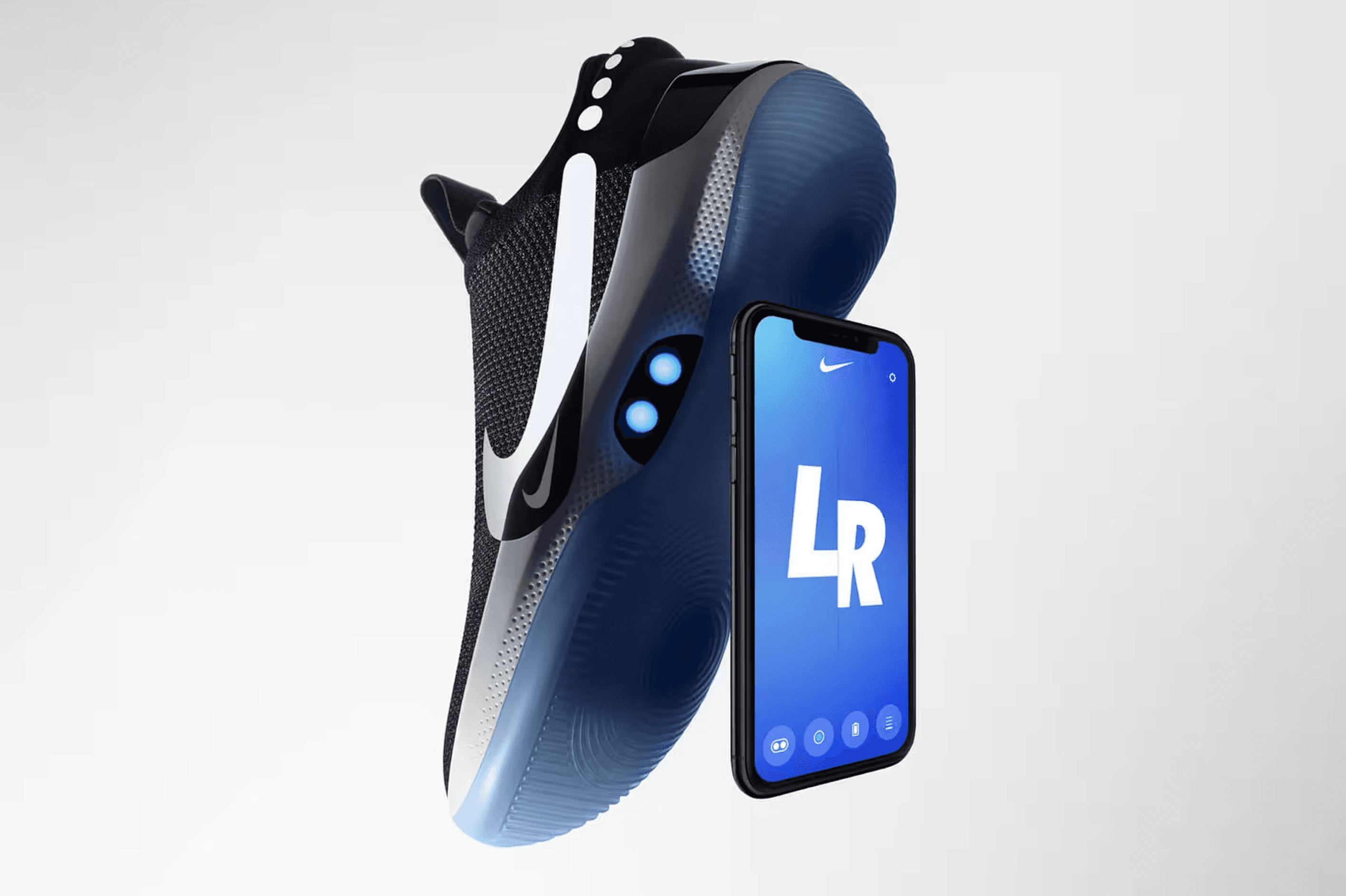
PerformanceinnovationiswhyNikeistheglobalmarketleaderinsportsandfitness.WhenTinkerHatfieldbroughttheself-lacingAirMAGtolifein2016firstimaginedinBacktotheFutureIIitwasasignalthatthefutureoffootwearcouldbeintelligent,adaptive,andresponsive.

PerformanceinnovationiswhyNikeistheglobalmarketleaderinsportsandfitness.WhenTinkerHatfieldbroughttheself-lacingAirMAGtolifein2016firstimaginedinBacktotheFutureIIitwasasignalthatthefutureoffootwearcouldbeintelligent,adaptive,andresponsive.

PerformanceinnovationiswhyNikeistheglobalmarketleaderinsportsandfitness. WhenTinkerHatfieldbroughttheself-lacingAirMAGtolifein2016firstimaginedinBacktotheFutureIIitwasasignalthatthefutureoffootwearcouldbeintelligent,adaptive,andresponsive.

That signal became a platform. From 2017 to 2022, while at Evolve, I worked with the Nike's Smart Systems team to design the on-shoe experience and wireless charging for successive generations of the Adapt product line — culminating in the release of the Cryptokicks iRL.

That signal became a platform. From 2017 to 2022, while at Evolve, I worked with the Nike's Smart Systems team to design the on-shoe experience and wireless charging for successive generations of the Adapt product line — culminating in the release of the Cryptokicks iRL.

Approach

Lean UX —Build, Test, Learn (repeat)

Build, Test, Learn (repeat)

Working in close collaboration with the engineering group, I led a 3 person team to redefine the on-shoe experience based on the Adapt BB's —including haptic feedback, button states, interaction model, 24 light packs to customize the experience, and overall usability for the smart sensing footwear platform.


Role

Creative Direction, UX Lead, Research Lead

Impact

New interaction model built and tested with end customers, improved usability based on customer service call drivers, and automated workflows to reduce production time from weeks to days
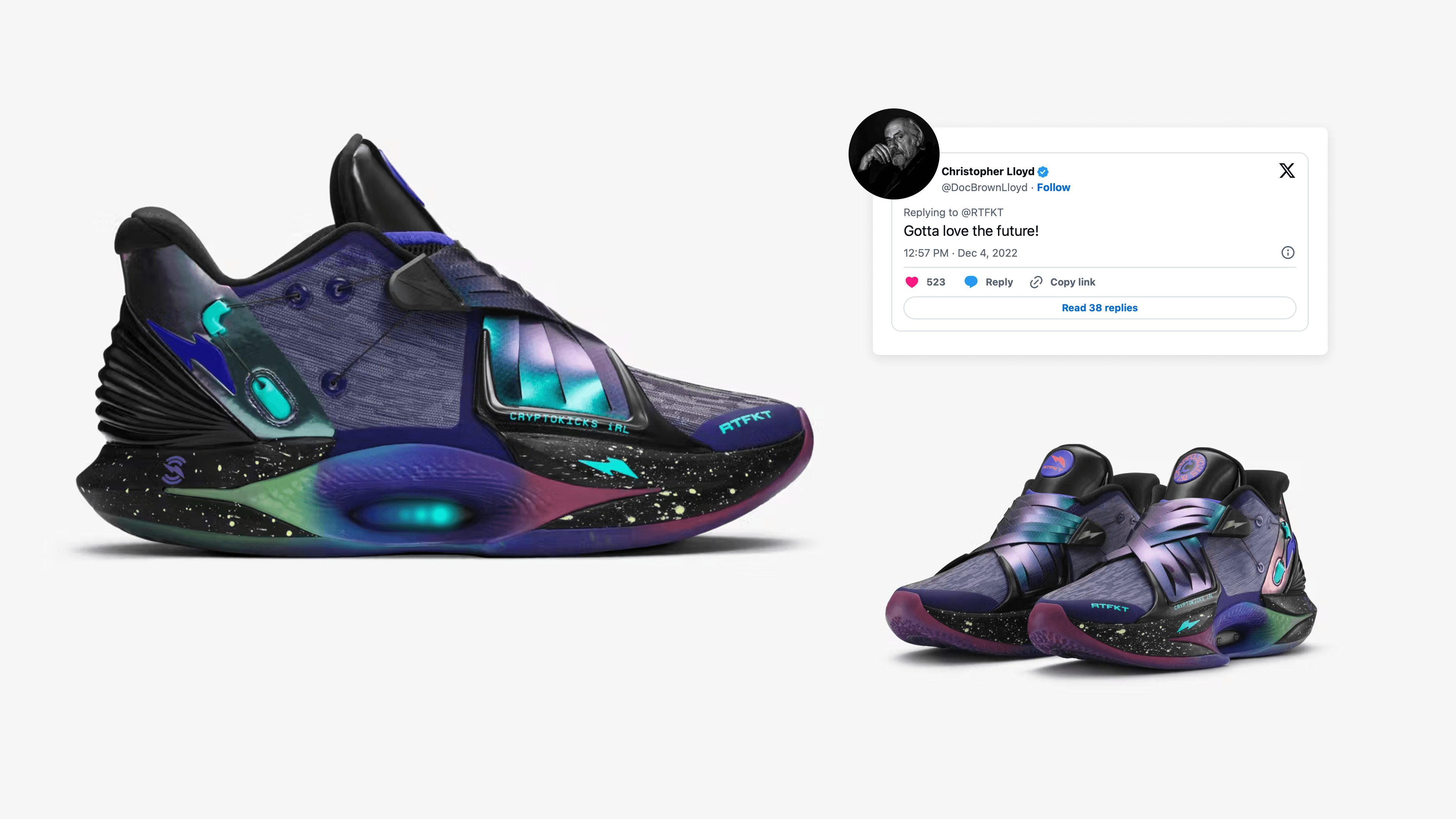
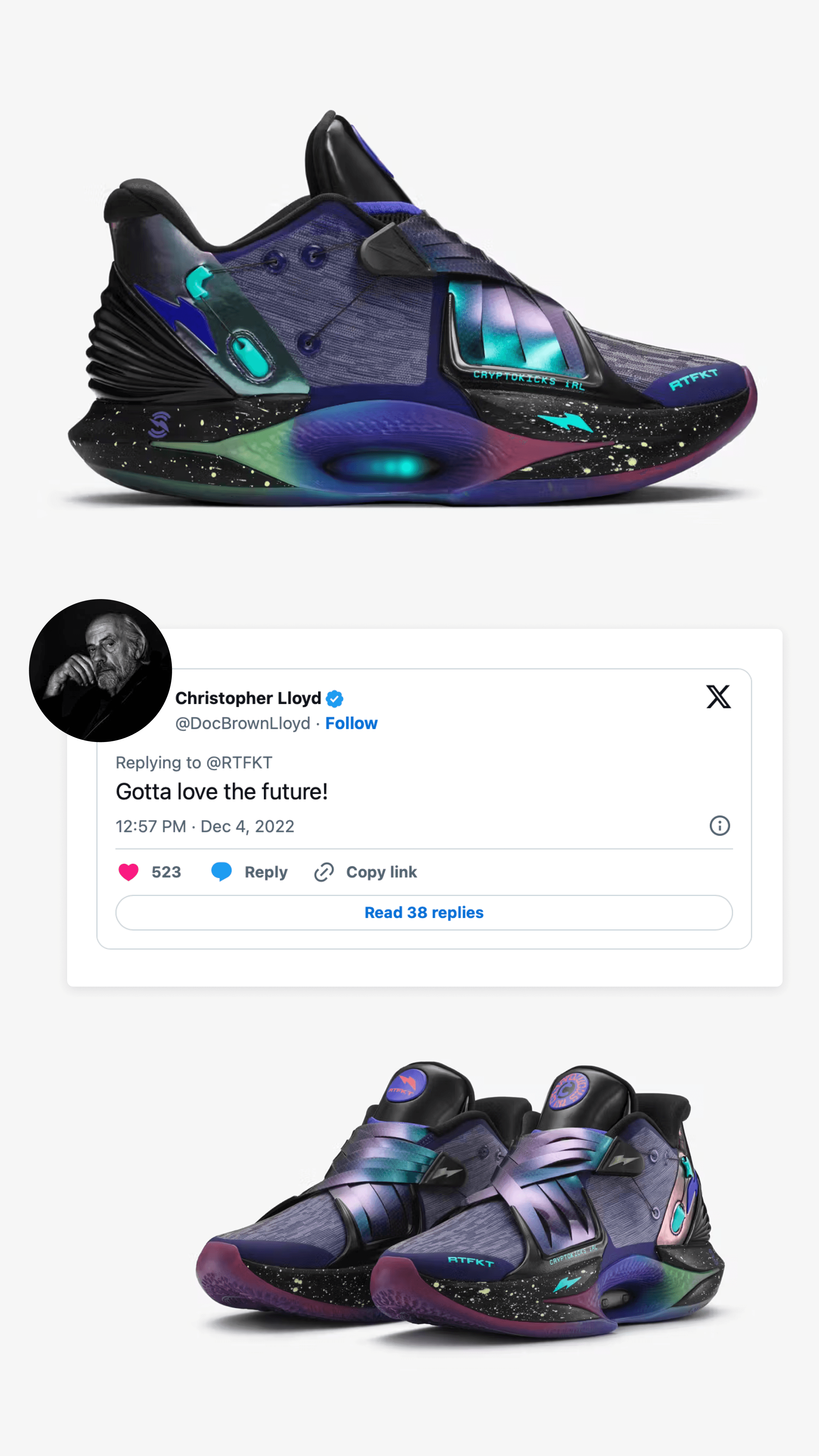
Hero image of “Space Dust” shoe color way with a social post from Back to the Future II character, Doc Brown, “Gotta love the future"

Evocative, Dynamic, Sensorial

Diagram of LED lighting array

Light the way

On-shoe visualizations (6 LED array) convey useful information to the wearer through the use of illumination, motion and color.

Diagram of LED lighting array

Light the way

On-shoe visualizations (6 LED array) convey useful information to the wearer through the use of illumination, motion and color.

Diagram of LED lighting array

Light the way

On-shoe visualizations (6 LED array) convey useful information to the wearer through the use of illumination, motion and color.

Diagram of the haptic engine

Feel the feedback

On shoe vibration patterns enhance interactions and alert the wearer to critical or urgent events that require attention.

Feel the feedback

On shoe vibration patterns enhance interactions and alert the wearer to critical or urgent events that require attention.

Feel the feedback

On shoe vibration patterns enhance interactions and alert the wearer to critical or urgent events that require attention.

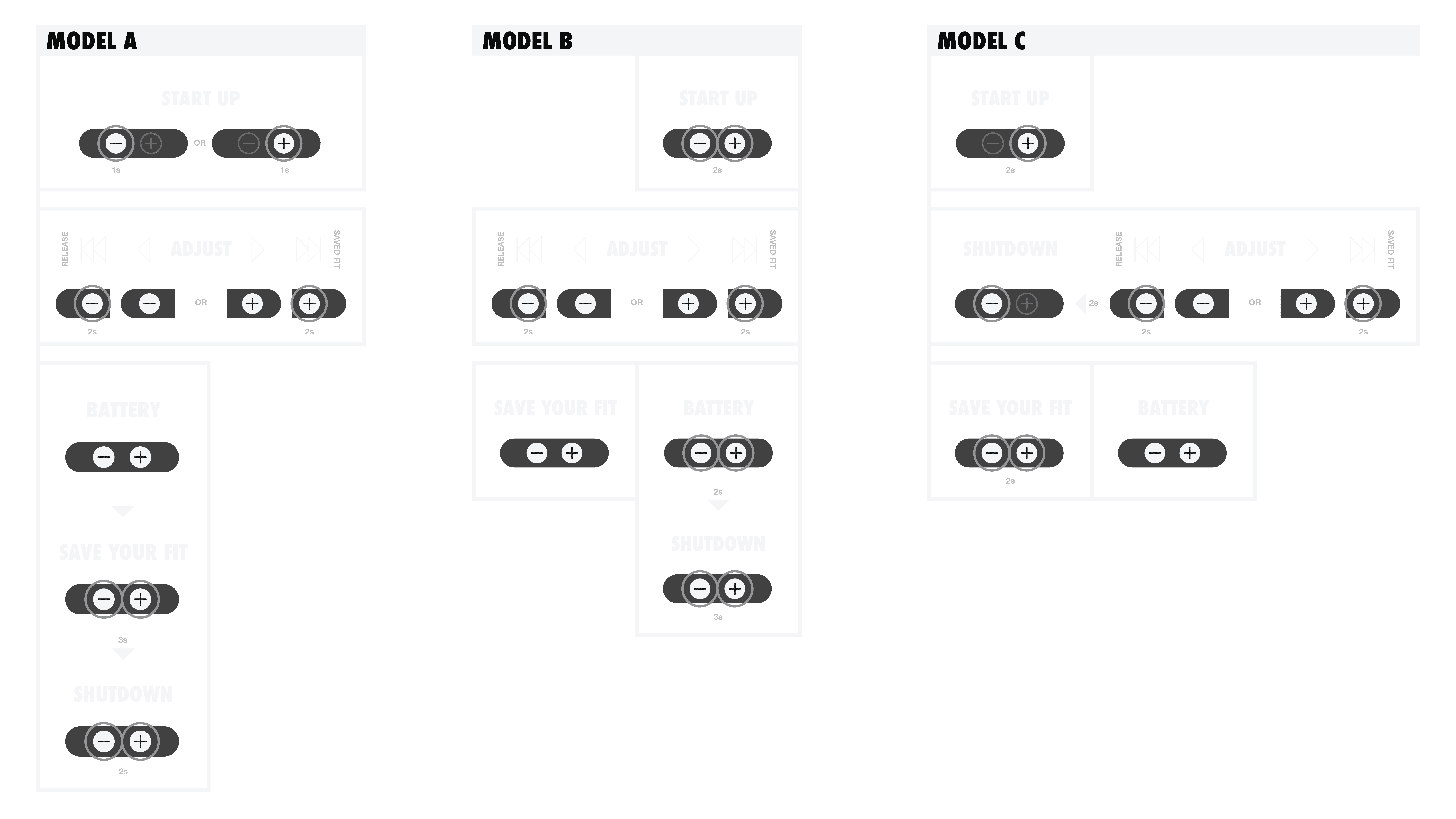
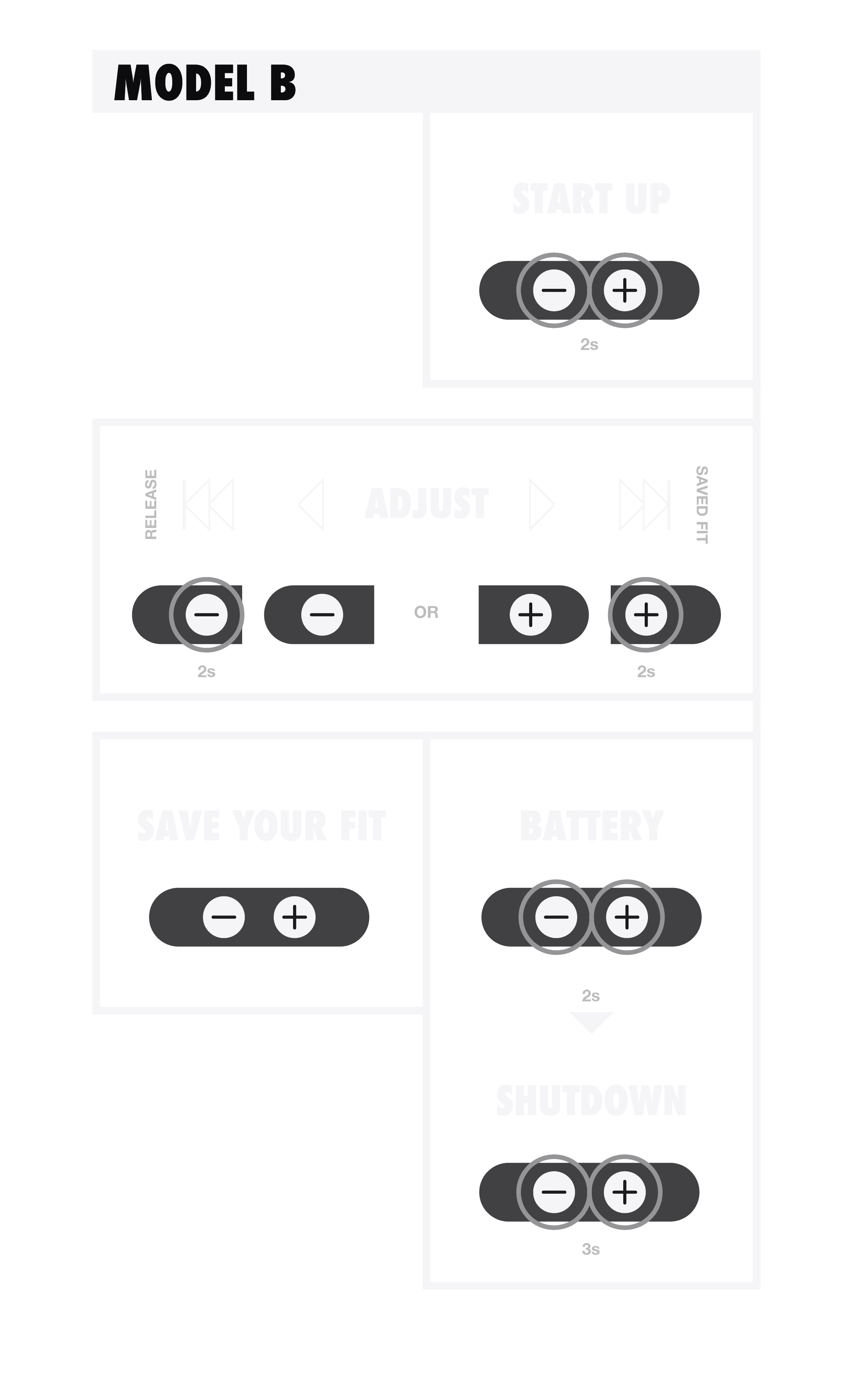
Image of three interaction models used during qualitative research to understand menu structure and hierarchy for the final on-shoe experience

Three (3) interaction models were designed and tested with athletes* (button presses and feedback)


Our team developed a script to automate the production process to deliver ahead of schedule in days, not weeks —Miro/After Effects/Processing/JSON
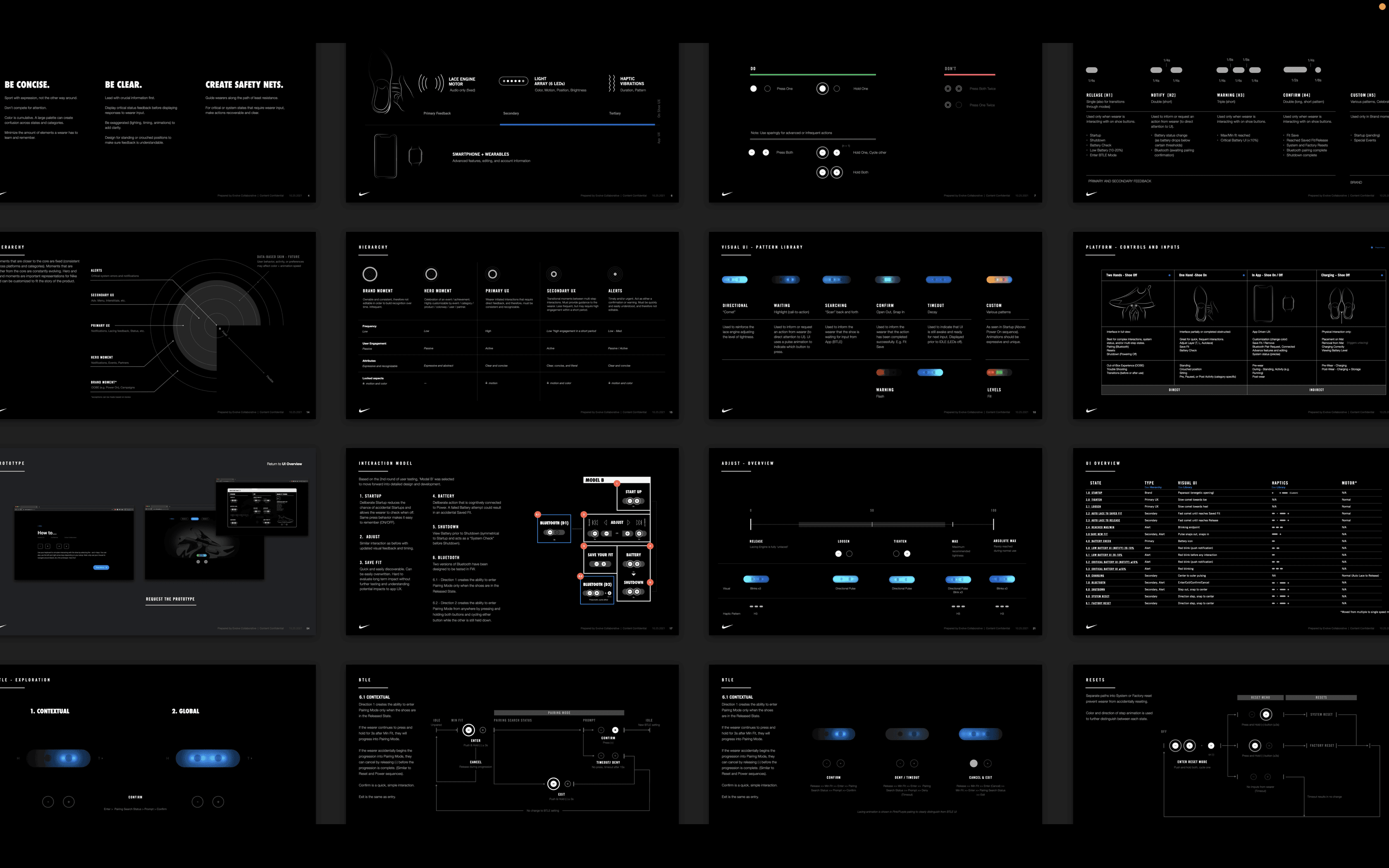
Grid of UI guideline reference pages including key states, behavior, and pattern libraries

UI Guidelines

Experience Principles

New model, new rules

New model,
new rules

Be concise.

Sport with expression, not the other way around. Don’t compete for attention. Color is cumulative. A large palette can create confusion across states and categories. Minimize the amount of elements a user has to learn and remember.

Be bold.

Lead with crucial information first. Display critical status feedback before displaying responses to user input. Be exaggerated (lighting, timing, animations) to add clarity. Design for standing or crouched positions to make sure feedback is understandable.

Create safety nets.

Guide users along the path of least resistance. For critical or system states that require user input, make actions recoverable and clear.

Be concise.

Sport with expression, not the other way around.

Don’t compete for attention.

Color is cumulative. A large palette can create confusion across states and categories.

Minimize the amount of elements a user has to learn and remember.

Be bold.

Lead with crucial information first.

Display critical status feedback before displaying responses to user input.

Be exaggerated (lighting, timing, animations) to add clarity.

Design for standing or crouched positions to make sure feedback is understandable.

Create saftey nets.

Guide users along the path of least resistance.

For critical or system states that require user input, make actions recoverable and clear.

A collectors and resellers dream

Self-lacing shoes had a perception problem. Since the Nike MAG commanded $10,000 at auction and the HyperAdapt 1.0 retailed at $720, adaptive footwear had been framed as a collectors item. The Adapt platform was in search of a performance proposition that wider audiences could afford.

The Adapt BB changed some of that. At $350 and designed for performance basketball, it put intelligent footwear on the feet of athletes who took them out-of-the-box and onto the court. But the interaction experience still lived mostly in an app. The shoe itself had a limited voice. For technology this personal, that lack of affordance and feature set was a missed opportunity.

Self-lacing shoes had a perception problem. Since the Nike MAG commanded $10,000 at auction and the HyperAdapt 1.0 retailed at $720, adaptive footwear had been framed as a collectors item. The Adapt platform was in search of a performance proposition that wider audiences could afford.

The Adapt BB changed some of that. At $350 and designed for performance basketball, it put intelligent footwear on the feet of athletes who took them out-of-the-box and onto the court.

But the interaction experience still lived mostly in an app. The shoe itself had a limited voice. For technology this personal, that lack of affordance and feature set was a missed opportunity.

Designing a screenless interface

The deeper challenge for our team was understanding the limits of cognition for a screenless interface.

How do you make a connected shoe feel intuitive to someone who has never worn one (new behavior)?

How do you design feedback that lives on the body to augment the experience, rather than distract?

How do you create a design language using just six (6) LEDs?

Pandemic and Virtual Research

The project was conducted during the height of the Pandemic as everyone was in lock down. The situation required experimentation and new approaches to evaluate solutions remotely through simulations and interactive prototypes.

Challenges

Challenges

Designing a screenless interface

A screenless interface

The deeper challenge for our team was understanding the limits of cognition for a screenless interface.

How do you make a connected shoe feel intuitive to someone who has never worn one (new behavior)?

How do you design feedback that lives on the body to augment the experience, rather than distract?

How do you create a design language using just six (6) LEDs?

Pandemic and Virtual Research

The project was conducted during the height of the Pandemic as everyone was in lock down. The situation required experimentation and new approaches to evaluate solutions remotely through simulations and interactive prototypes.

Opportunity

Opportunity

Building performance intelligence

The project was a chance to create dynamic expression and remove points of friction from the larger system as the platform matured (e.g., bluetooth pairing, system reset, factory restore). This meant translating complex system states (lacing tension, charge level, gesture input, mode transitions) into coherent, intuitive physical feedback that users could feel and understand without looking at a screen.

By pairing Nike's Adapt lacing technology with haptic feedback, gesture control, and a new LED array the shoe became a first of it's kind: a wearable with a personality.

Building performance intelligence

The project was a chance to create dynamic expression and remove points of friction from the larger system as the platform matured (e.g., bluetooth pairing, system reset, factory restore).

This meant translating complex system states (lacing tension, charge level, gesture input, mode transitions) into coherent, intuitive physical feedback that users could feel and understand without looking at a screen.

By pairing Nike's Adapt lacing technology with haptic feedback, gesture control, and a new LED array the shoe became a first of it's kind: a wearable with a personality.

Impact

"

"

The UI for this product was very well done and is generating some well-earned positive feedback. I really appreciated all of the extra work you all put into the details – the button timing evaluations, well placed and usable haptics, the list goes on…

The UI for this product was very well done and is generating some well-earned positive feedback.


I really appreciated all of the extra work you all put into the details – the button timing evaluations, well placed and usable haptics, the list goes on…

— Principle Engineer, Nike

A new sensory platform

The project went from idea to implementation to deliver both design intent, specification documentation, and production ready assets for launch. Working with in-line product teams we defined a new design language and increased usability for one of Nike's most technically ambitious connected products — bridging engineering, UX, and physical sensation.

Throughout the pandemic, an intense usage of simulations and prototypes were used to build out the key states of the experience while the firmware and supporting systems were delayed. This process allowed the team to iterate early and limit the amount of updates required once in production. Several new workflows were created to help ship 24 light packs to customize the user experience in just days, not weeks.

Impact

Introduced new ways of working: The project was a testament to how the design process can move teams forward when standard ways of working get disrupted.

  • New haptic and interaction model virtually tested with end customers through simulations and iterative prototyping

  • Improved usability and reduction in customer service calls

  • Improved workflows to reduce production time from weeks to days

Ready to build the next evolution in smart sensing?

Project

Credits
Credits

Year

2020-2022

For

Nike

Role

Creative Direction, UX Lead, Research Lead

With

Evolve — Mike Abeln, Dan Nicholson, Christian Freissler and Nike Smart Systems

Made Possible.

Let's connect

© MMXXVI Noah DiJulio All rights reserved

Made Possible.

Let's connect

© MMXXVI Noah DiJulio All rights reserved

Made

Possible.

Let's connect

© MMXXVI Noah DiJulio All rights reserved